

Why West Virginia, Not Kansas, Will Win the Big 12

Over the past few seasons, the Big 12 has arguably taken the throne as the best College Basketball conference in the country. No team has been able to knock the University of Kansas from the top spot of the conference. Kansas has taken every Big 12 regular season championship since 2005, dominating stellar teams like Kevin Durant’s Texas Longhorns and Marcus Smart’s Oklahoma State Cowboys. Not even Buddy Hield’s prolific 2016 Oklahoma Sooners could knock Kansas off from the top spot in the conference. Kansas has been led by Mario Chalmers, the Morris twins, Andrew Wiggins and Perry Ellis in recent times and has always prevailed in the end.

The Jayhawks face a difficult road this year if they want to make it thirteen regular season titles in a row, as they are currently part of trio of Big 12 teams who rank inside the AP Poll’s top 25. Both Baylor and West Virginia have a chance to knock off Kansas to give the Big 12 a new conference champion for the first time since 2004. Baylor had the early season advantage to be that team as they carried an undefeated record and the #1 spot in the AP Poll for a considerable chunk of time, until they visited Morgantown and were dominated by the Mountaineers by a score of 89-68.

So why is West Virginia the team to finally end Kansas’ dominance? The simple answer: the press.  Nicknamed Press Virginia, coach Bub Huggins’ squad has become the most feared defense in all of college basketball. Playing against West Virginia is forty minutes of non-stop pressure and traps all over the court. This team wants you to be as far out of your comfort zone as possible. Huggins started the press-oriented offense three seasons ago to make up for a lack of talent, and despite tons of fouls and many easy transition baskets given up, the Mountaineers still finished with a sweet sixteen appearance. Last season, the Mountaineers improved as  ateam and earned a three-seed in the NCAA tournament. This season, the press has been a nightmare to other teams, as West Virginia has been forcing an average of 24.6 turnovers per game, which is about one in every three opponent possessions. As a team, they are rank in the top five in both offensive and defensive efficiency. West Virginia is the only team in the nation who ranks inside the top five of both categories.

West Virginia has the statistical backing to prove themselves to be one of the best teams in college basketball, paired with their 15-4 (4-3) record and #18 ranking in the latest AP Poll. Two recent heartbreaking losses has been the reason for West Virginia’s recent fall out of the top ten in the AP poll, where they were ranked #7. However, these two losses came to conference teams by a total sum of six points. Expect West Virginia to come back strong and be the team to finally knock Kansas off from the top of the Big 12, as well as compete for a national title come March.
The Three-Pointer Can Ruin Basketball

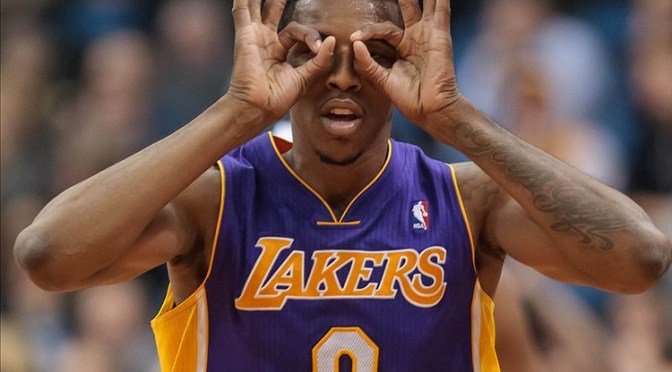
The installment of the three-point line changed the way basketball is played. While we still see post-proficient players in this day and age, one thing that is undeniable is that along with the evolution of basketball, there has also been the evolution of the types of players in the game. Specifically, one type of player. And you know about the type of player I’m writing about because if you have ever known a kid who loves basketball, you’ll know what kind of situation they’ll play over and over again in their heads:

____________________

The kid’s team is down by two. They need two to tie, three to win. The shot-clock hits 5. The kid gets the ball. 4. The kid dribbles. 3. The kid picks up the ball behind the three-point arc. 2. The ball leaves the kid’s hands. 1. The ball reaches its zenith. 0. The buzzer goes off as the ball rips through the hoop. The crowd goes wild and that kid is hoisted onto the shoulders of his teammates.

____________________

I believe that there is a problem with the romanticism behind the three-point buzzer beater, and in a similar vein, the whole, ‘pull-up three-pointer’ in general. When it goes in, the pull-up three-point shot is one that can bolster egos, and diminish opponent’s confidence, leading them to leave the playground defeated. However, that doesn’t mean it is a good shot. In fact, it is an incredibly low-percentage shot for many, and one, I believe, that too many players take advantage of it in today’s version of basketball. This type of player, the one who takes pull-up threes, is one who is not looking to create the best possible play for his team, but rather to throw up a prayer from 24+ feet. While this is not always the case, I believe that the idea of being the one to get the team ahead by one with no time remaining can be too enticing, meaning that team-oriented basketball takes a backseat.

Basketball used to be played a bit more like soccer; there was no added benefit of a long range shot, meaning that plays to get the ball closer to its desired destination had more value. In this version, teams look for the best shot (the highest percentage shot) they can get within 24 seconds. The three-point line left this idea intact, the idea that teams should always look for the best shot possible, but it started to draw players further away from the basket, towards low percentage land. The Spurs and many other teams have shown that three-point shots can be apart of a game that does look for the best shot possible, especially when playing against a zone defense.

____________________

“What about all of the teams that don’t use the three-point shot as effectively, dad?” 

“Well, son, that’s a good question.”

____________________

Those teams don’t look so good, and their pull-up threes don’t belong in a game that looks for the best shot possible; It is too easy for a player to just pull up and launch a 24-foot prayer instead of looking for the best shot. But as always, this may not continuously be the case, and sometimes, the shot clock doesn’t have enough time left on it for a team to find a good, high-percentage play.

So with the addition of the three-point line, the NBA lost many intricately run plays to ego-boosting pull-up three-pointers. Does that mean something needs to change?

The three-pointer also adds extra excitement to basketball, like it did to the kid on the playground. It allows some teams to come back from larger deficits and could help even out the game. It allowed a new type of player to enter the NBA: the three-point specialist. Usually, these players make up for height and weight advantages other teams have over them by being able to shoot from anywhere past half-court.

The main question I would like to leave here is this: when a team makes a lower percentage shot, should they be rewarded by an extra point? Or should a shot from outside be worth the same as one inside the paint?

Let’s say that we’re watching a game between two teams: one only shoots three pointers, the other only shoots twos. Each team gets 85 shots, which was around the average for last year’s shots by team per game. The median 2 point shot percentage during last years season was about 49%, and the median 3 point shot percentage was 35%. If we apply these numbers to each team, this is what we get:

____________________

Final Score (both scores rounded down)

Team 3-Pointer – 29.75 shots made • 3 points per shot = 89

Team 2-Pointer – 41.65 shots made • 2 points per shot = 83

3-Pointer wins!

____________________

The idea here is that you can run just three point plays, make 14% less than your 2-pointer counterpart, and still win the game by six points. The three-point shot decreases the value of the high percentage shots, and the NBA needs to think about if this is good for the development of the sport or not.