Why the Yankees’ Future is so Bright

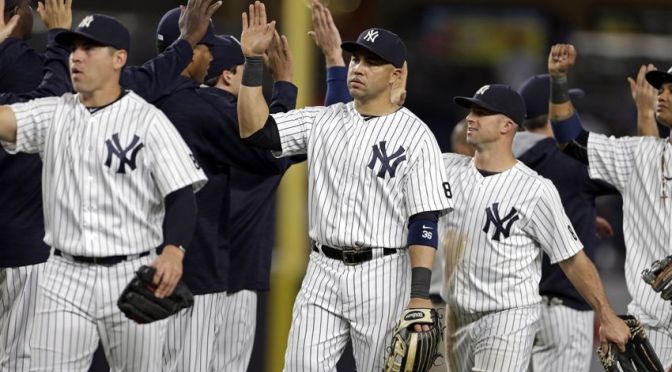
After the Yankees unloaded their assets last season at the trade deadline, fans were ecstatic to see their Baby Bombers play in August and September. Despite finishing five games back of a Wild Card spot, these youngsters kept the Yankees in contention throughout the rest of the season. The middle infield tandem of Starlin Castro and Didi Gregorius became exciting to watch, both in the field and at the dish. We watched Gary Sanchez blast his way into Rookie of the Year conversation while playing just two months in the big leagues. Aaron Judge and Tyler Austin both had glimpses of greatness as well. Greg Bird will be back from injury and likely take the helm at first base to replace the retired Mark Teixeira. Fans are excited to watch these young promising talents grow more in this upcoming season.

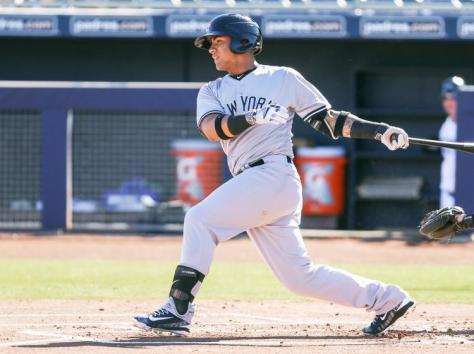
While the 2017 Yankees are shaping up to be athletic and exciting, let’s not forget about the Yankees’ stacked farm system which some consider to be the best in baseball. We all know ginger sensation Clint Frazier, who was the key piece in the Andrew Miller trade with Cleveland. Stud infield prospect Gleyber Torres is another future asset for the Yankees. Torres has been said to be the best prospect in baseball, and was the youngest Arizona Fall League MVP ever, where he hit over .400.
gleybar-web.jpg
Yankees star prospect Gleyber Torres

While we know a whole lot about those two young men, there is so much more talent than just those two within the  Yankees system ready to get their crack at the big leagues. Luis Severino, Luis Cessa and Chad Green all have potential, but have seen early struggles as starters. Even if these guys don’t pan out, the Yankees have multiple legitimate pitching prospects for the first time in a very long time. Former first round pick James Kaprielian, southpaw Justus Sheffield, Chance Adams and Domingo Acevedo are all considered to be within the Yankees’ top ten prospects. Dillion Tate and Albert Abreu, who came via trade from Texas and Houston respectively, are considered to be a few big name prospects to be acquired by the Yankees as of late. Tate was the fourth overall selection in the 2015 amateur player draft.

While the Yankees made their farm system elite by trading many of their veterans, they have a plethora of homegrown talent as well. Aforementioned Sanchez, Judge, Austin, Bird and Kaprielian are all homegrown guys, as well as speedster Jorge Mateo, 2016 first round pick Blake Rutherford, slugger Miguel Andujar, and future gold glover Dustin Fowler. All of these prospects have the potential to be future All-Stars.

Miguel-Andujar-001.jpg
Yankees prospect Miguel Andujar

With all of this young talent just down the road and with big money contracts like A-Rod and Teixeira now off the books along with CC Sabathia’s contract set to expire at the end of the 2016 season, the Yankees will be prepared to make a free agency splash. This likely wouldn’t occur until after this upcoming season, but the 2018 free agent class looks to be promising. Multiple MVP honors recipients like Josh Donaldson, Andrew McCutchen and Bryce Harper will be available barring re-signing, as well as All-Stars Manny Machado, Dee Gordon and Adam Jones. The pitching class features some CY Young winners in Clayton Kershaw and Dallas Keuchel, as well as Matt Harvey and Jose Quintana. David Price could make an appearance in free agency as well, should he opt out of his deal with Boston.

With all of the prospects at the Yankees’ disposal along with the extra space being made for the insane 2018 free agency class, the future is brighter than ever for the Yankees. Don’t be surprised to see another Yankee dynasty coming to the Bronx.


New NBA Collective Bargaining Agreement to Take Effect July 1, 2017

Towards the middle of December, the NBA and the National Basketball Players Association (NBPA) agreed on a new Collective Bargaining Agreement (CBA) that will take effect on July 1, 2017 and will run through the 2023-24 season.

While there are many parts to this multifaceted agreement, the most notable of its many aspects involves a dramatic increase in player salaries, along with alterations to the free agency process.  Minimum salaries in the NBA are rising by 45 percent and two-way contracts between the NBA and its developmental league (The D-League) are now finally a reality, as teams will now be able to develop their younger players who are not receiving consistent playing time in the NBA.  These are without a doubt much needed-changes to make the NBA even stronger, but with a rising salary cap and with free agency approaching quickly this summer, any alteration to the free agency process should be examined closely by all NBA franchises to ensure that major mistakes aren’t made.

Under the new CBA, there are major changes being made that will affect the landscape of free agency.  Measures were taken in this agreement to prevent franchises from forming “super teams” such as the 2010-2014 Miami Heat led by the Big 3 of LeBron James, Dwyane Wade and Chris Bosh, along with the current Golden State Warriors team that boasts four bona fide All-Stars and two former MVPs.  The prior CBA generally did a good job of enticing big-name players to remain with the franchises that originally drafted them. Despite Kevin Durant opting to leave the small-market Oklahoma City Thunder to join the Warriors, he remained with the Thunder organization for nine years, which is longer than most players elect to stay with one franchise in the first place.

2012-0606-Kevin-Durant-op3b-45634.jpg

The new CBA makes it far more lucrative for players to remain with their “hometown” teams.  Designated veteran star players will be able to sign five-year extensions with their current team with one year left on their former contract.  Previously, players were only permitted to sign four-year contract extensions with one year left on their current deal. Due to their naming to the All-NBA team in the past and their playing in the NBA for 7-9 years, 2018 free agents Russell Westbrook, Paul George and DeMarcus Cousins all qualify for this designated veteran star player status. As a result of this new CBA, designated veterans can sign contract extensions worth up to $31 million annually for five years.

This aspect of the 2017 CBA (similarly to the agreement ratified in 2011) was established in order to prevent marquee players from leaving small-market teams for bigger market teams.  These big market teams possess the financial wherewithal to have up to four All-Stars under contract.  The NBA wants to give these small market teams a shot to win a title and to succeed on more of a level playing field, rather than to have a league dominated by the allure of endorsements and big money from bigger market teams.

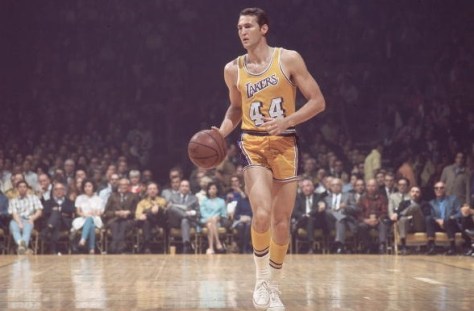
I’m not going to sit here and say that the Warriors are ruining the NBA because of the immense talent they have in their starting lineup, because that is just not true.  The whole point of free agency is that the player is allowed to sign with whichever franchise offers him a contract with terms that he can agree upon.  While signing with the Warriors may have tarnished Durant’s legacy since he could have followed in the footsteps of players like Kobe Bryant and stayed with the franchise that drafted him, it was his decision to make.  Players should not feel like they have to stay with a franchise but rather that they can move on whenever they feel the need.  Jerry West recently stated publicly that if free agency had existed during his playing career, he would have left the Lakers to avoid ongoing confrontations with the team owner.  While it breaks my heart to hear such an honest assessment as a diehard Lakers fan, a player should be allowed to depart for a team during free agency if he so pleases.

jerry-west-2176631.jpg

The new CBA incentivizes players to remain with the teams that drafted them, which is without a doubt an attempt by the NBA to eliminate super teams and to create a level playing field where a small market team possesses nearly the same chance as a big market team to contend for the Larry O’Brien trophy.  However, if a player really does not like his situation, much like Durant in Oklahoma City, then he will now be forced to give up a substantial amount of guaranteed money in order to make his exit.  This still allows players to leave and sign with other teams, but the system rewards players for loyalty to an organization. The new CBA should be applauded and its effects will hopefully be greatly felt for years to come.