
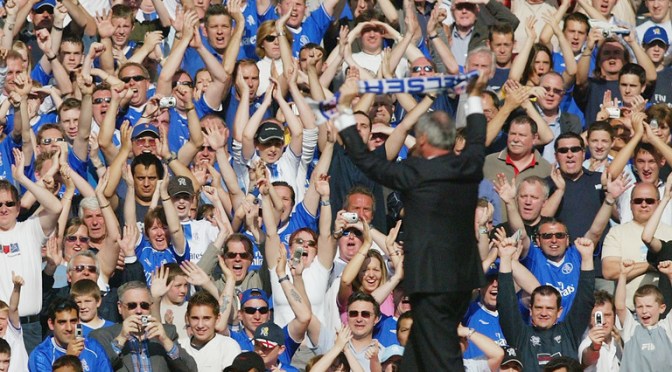
Claudio Ranieri is a genius.
In the 2014-2015 Premier League season, Leicester City was a mess. Going into 2015, Leicester looked set for relegation into the EFL Championship, the second division of England, as they sat at the bottom of the league standings. Yet somehow, the Foxes managed to finish in 14th place, escaping the treacherous pit of regulation by a nervy six points. Ugly football riddled the club at times, but all they needed was survival. After such a treacherous season, Leicester City fired Nigel Pearson, their coach who led Leicester to promotion from the third division into the Premier League.

The man chosen to fill his place was none other than signore Ranieri.
Nobody could have predicted what happened starting three months after their survival of their first run at the Prem, and only one month after Ranieri’s hiring. In what is widely considered to be the greatest sporting achievement of all time, Leicester City won the 2015-2016 Barclays Premier League for the first time in the club’s history, overcoming odds of 5000/1 in doing so. Ranieri took what had seemed like a team of average and below-average players and turned them into a disciplined, efficient and exciting team that poured every ounce of passion into their play. Players likes Jamie Vardy, Riyad Mahrez and N’golo Kante had breakout seasons, and based on their lackluster performances in the season before, Ranieri deserves all of the praise in the world for what Leicester’s players achieved. To top things off, Mahrez was named Player of the Year in England, and Ranieri was named Manager of the Year.

So yes, you could say that the Italian manager is a deity at Leicester City.
Sadly, though, this season has not painted a picture anywhere close to that of last season’s fairytale league championship. Leicester struggled through the entire first half of the season, largely walking along a tense tightrope of two or three positions that dangled above the relegation zone. They seemed to have reverted back to the ways of two seasons before, when they struggled to merely escape relegation to the Championship. The team seemed to be lacking the fiery desire to succeed which brought them the league title just months prior, and relegation looked to be a serious threat.
After performing miracles in his first season with the club, Ranieri was now subject to serious criticisms about his team’s poor form. Critics of Ranieri pointed to the fact that Leicester was more or less fielding the same team that won the Premier League the season before, but they clearly missed the presence of Kante after the summer transfer window saw him making a move to current table leaders Chelsea. Kante is the kind of player that every team needs: he seems to be everywhere on the pitch at all times, intercepting or tackling the ball in key areas, starting and finishing counter attacks, and controlling the tempo of the game. During their championship season, the 5’7” Frenchman led Europe’s top five leagues in tackles. Without N’Golo Kante, Leicester City would never have won the Premier League.

Leicester failed to adequately replace Kante, once he departed, which is another potential area of criticism for Ranieri, but here is the problem with such criticism: you cannot easily replace a player like N’Golo Kante. So, with such a huge hole now existing in the Leicester City starting XI going into a new season, many expected Leicester to return to their form of the 2014-2015 season, and they did. While Ranieri was in part to blame for such a drastic drop in form, surely his job was safe. His heroics in the season before were nothing short of magical sorcery, to say the least, and he was revered not only by Leicester City, but by the entire international football community for his tremendous achievement. If he could lead his team to the Premier League title in his first season in charge of the side, then he could surely save them from relegation in his second.
The hierarchy at Leicester City disagreed, and only nine months after creating history in winning the Premier League, Claudio Ranieri was fired in February of this year.
Leicester City’s decision to sack Ranieri came largely as a shock for the football community. It was simply unfathomable as to how a manager who beat the odds of 5000/1 in his first season as coach to win the most competitive league in the world could be fired less than a year after doing so. Although Leicester’s form was indeed awful in the first half of the 2016-2017 season, many felt that Ranieri should have been given the courtesy of at least completing his second season with the club before being given the boot. Ranieri was adorned for his genuine personality, which was central to Leicester’s 2015-2016 success, and despite his short tenure, he almost seemed to take on the persona of the grandfather of the club. How could you fire your grandfather?
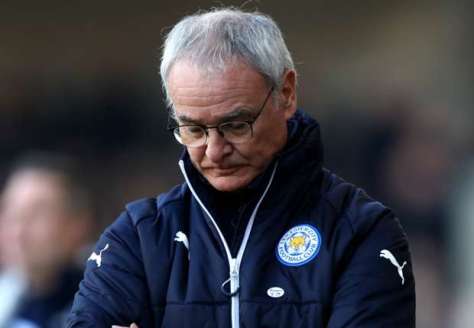
Sadly, Leicester City’s choice to sack Claudio Ranieri is reflective of a much wider trend that has plagued football across Europe’s top five leagues for quite some time now. Arsene Wenger is currently the longest serving manager in Europe’s top five leagues, having coached Arsenal for 20 years. The next longest serving manager, Christophe Galtier for Saint-Etienne, has only been the coach there for seven years. With such a large gap between first and second longest serving coaches in mind, it is clearly rare nowadays for any manager to remain in charge of a club for more than a couple of seasons. Football clubs are hungry for immediate success, expecting their managers to make significant improvement in their team’s ability to perform and achieve positive results, seemingly overnight. Such an unhealthy mentality ultimately leads to the premature sacking of managers before they are even given the time to cement their philosophies within the training ground.
What makes the case of Ranieri so confusing, so infuriating, and so heartbreaking, is that he was the definition of immediate success. In fact, he was the most dramatic case of immediate success in the history of the sport. Leicester City went from being the worst team in the Premier League to being the best team in the Premier League in just one calendar year, thanks to Ranieri. Certainly he did not deserve to be on the end of such strong criticisms that he received during the first half of the 2016-2017 season so soon after working wonders. Would firing grandpa really improve the quality of performances for Leicester City?
Sadly, three weeks into the new Leicester Era, the answer is yes.
Since Ranieri’s dismissal, Leicester City has created significantly more goals, and are conceding far less at the same time. The club has played four games under current coach Craig Shakespeare since Ranieri was dropped in late February, and they have won all four of these games, scoring 11 goals and conceding only four. These include a 3-1 win against top side Liverpool, and a massive 2-0 win against Sevilla, which sent them through to the Quarterfinal of the Champions League for the first time in the club’s history.

In the short term, things have looked brighter for Leicester City, and one could certainly argue that this impressive run of form is directly correlated with Ranieri’s dismissal. It is important to keep in mind, though, that three weeks is not enough time to assess whether this success can be accredited to the sacking of Claudio Ranieri or not. We will have to wait and see where Leicester City end up both in the Premier League and in the Champions League in order to make such a statement.
Regardless of whether sacking Ranieri goes on to help Leicester City avoid relegation like they did in the 2014-2015 season, I cannot help but hold a grudge against the club for the way that they treated the Italian genius. Although this sounds selfish of me, a large part of me actually wishes that Leicester City is relegated again, strictly so that the club front office rues their decision to let Ranieri go. The lack of faith that they showed to a man who gave them more than they could ever even dream of having in just nine months is astounding. It is disrespectful to the man himself, to Leicester city fans (excluding the small contingent who supported his sacking), and it is disrespectful to football culture as a whole.
So, to repeat the sentiments of so many football fans around the world, I have two words for Claudio Ranieri:
THANK YOU!


 Banter Sports