From Three Champions Leagues to Three Managers

While a contingency of Dutch football fans did predict that Ajax would pull off a massive upset at the Bernabeu on Tuesday night, only your neighborhood’s deluded Barca fan would have foreseen Real Madrid being humbled by a shock scoreline of 4-1 last week in the Champions League Round of 16.

36e7bfe26d3a464d97cf3a6f11e75460_18

It may be the last thing that Madridistas want to hear right now, but my cousin, a die-hard Real Madrid fan, said it best: “Tuesday’s drubbing at the hands of Ajax is the best thing that’s happened to Los Merengues since becoming the first side in history to win the Champions League in three consecutive seasons.”

This season started off in Real ugly fashion for a number of reasons (see what I did there?), culminating at the Camp Nou stomping by Barcelona in October by a score of 5-1. That thrashing cost Julen Lopetegui his job, as he got the ax the following day after just three months in charge.

In came Santiago Solari.

1582056.jpg

Solari was a different story from Lopetegui. A former Madridista himself, the Argentine was a decent footballer in his playing days, notably sending Roberto Carlos down the line in the buildup to Zidane’s masterful volley in the 2002 Champions League Final. Fast forward some years, and Lopetegui began working as an academy coach at Real in 2013.

With such strong family ties, Solari was always going to be well-received by the Real Madrid faithful. A former Real player like Zidane, he had a higher set of expectations for the future of the club. Plus, having previously worked with the youth teams (also like Zidane), he immediately injected young blood into the first team, most notably through his inclusion of teenage Brasilian phenom Vinicius Jr.

ad89b64e0bef7b1b5e3d1714b5d652ba.jpg

Results were mixed: a 3-0 away defeat in the league to Eibar and a 3-0 home Champions League defeat to CSKA Moscow were contrasted by a successful Club World Cup. Four months in, Solari got an impressive away 1-1 draw at Barcelona and an even more impressive 3-1 away win against Atletico Madrid. Results aside, Los Blancos seemed to be rediscovering an identity that had gone missing during Lopetegui’s short tenure in charge.

That February form didn’t last too long though. In a matter of seven days from February 27th to March 5th, that “rediscovered identity” went out the window.

Three consecutive home defeats proved to be too much for the Real Madrid hierarchy to bear. Real lost 3-0 to Barcelona in the Copa del Rey, and then again to their arch nemesis 1-0 in the league. Their horrific week then culminated with Real’s shock loss to Ajax, effectively ending their chances of winning an incredible fourth straight Champions League.

8d9XbJfpAS

Six days later, Solari was shown the door.

Welcome back, Zinedine Zidane.

The man needs no introduction. For those unfamiliar with the history of football, Zidane is the bald guy who headbutted an opponent in the biggest sports event in the world. To the football community, Zidane is one of the most talented and successful players in the history of the sport.

As of May 2018, Zidane is also the most successful coach in Champions League history, after winning three Champions League titles in less than three years as manager of Real Madrid. His re-hiring after only nine months away from the club came as a slight surprise, but nonetheless, it makes sense. Real Madrid needs silverware, and of the current coaches either in between teams or looking to start a new journey, Zidane is the most successful of the lot in the last five seasons.

5c86c971250000e603c8bdf4.jpg

World class players know that silverware goes a long way in cementing their legacy. Zidane knew what it took to win as a player, and he quickly demonstrated that same ability as a manager. The opportunity to play under someone with such a thoroughly-documented winning mentality is a difficult one to pass up, no matter the team that they’re currently a part of.

While Zidane would probably be capable of overperforming with this current squad, he knows that his roster is in need of new life.

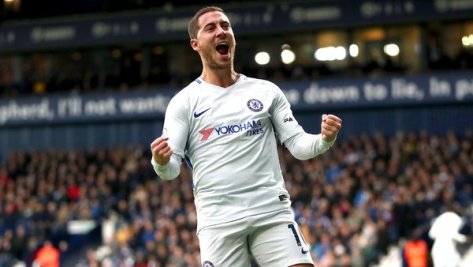
Eden Hazard, who is entering the last year in his contract at Chelsea, seems like the most sensible major signing to make this summer. Hazard has made clear his interest in playing for Zidane at Real Madrid, and his success in England has made him worthy of running the show for Real. This would allow Gareth Bale, who has looked unhappy at various points throughout his time in Madrid, to finally leave.
255776-large.jpg

Beyond Hazard, players like Kylian Mbappé, Neymar, Mauro Icardi, Milan Škriniar, and N’Golo Kanté are just a few names who Zidane could potentially sign. There is enough money in the bank for Florentino Perez to sign at least two players of the highest caliber. No matter who Real Madrid signs, they’ll be happy to have a winner at the helm.

At the end of the day, Real Madrid fans have Ajax to thank for Zinedine Zidane’s return to the Bernabeu.

Only time will tell what magic Zizou conjures up this time around.

The Wonderlic and the NFL Combine

Every year at the NFL Scouting Combine, future NFL players showcase their strength and skills through various tests and exercises. One test has nothing to do with physical skills but is a part of the Combine to measure critical thinking – the Wonderlic test.

What is the Wonderlic?

The Wonderlic test is a timed 50-question cognitive ability test that must be completed within a 12-minute window. The test is typically used by Human Resource departments at companies during a job interview to determine if a candidate would be a good fit at their company, or to help narrow down a large number of applicants for a job opening.

Questions feature basic arithmetic, logical reasoning and verbal reasoning related questions. The questions on the test are not necessarily difficult, but with a time limit of only 14 seconds per question, it is difficult to answer all of the questions before time runs out. You can take a sample Wonderlic test to see how well you might do on an official test.

Screen Shot 2019-02-28 at 12.51.46 AM.png
Visit freewonderlictest.com to take a Wonderlic Test!

The Wonderlic has been around since the 1920s, where it was primarily used as a cognitive ability assessment test for people in the military and at educational institutions – basically a shorter and faster version of an IQ test.

The Wonderlic at the NFL Combine

It wasn’t until the 1970s that the Wonderlic became a part of the NFL. Legendary Dallas Cowboys coach Tom Landry started asking college football players that he was scouting to take the Wonderlic test. Other football teams quickly adopted this, and the Wonderlic soon became one of many tests administered at the NFL Scouting Combine.

Unlike other tests at the combine, Wonderlic test scores are not released to the public. They are given to teams, but they somehow always manage to find their way to the media.

What is a Good Wonderlic Score?

The Wonderlic is a 50-question test, and each question is worth one point – a person who answers 25 questions correct would have a Wonderlic score of 25.

wonderlic2

The Wonderlic is designed so that the average score for the general public is 20. While that may sound low, it is important to remember that the questions are not easy, and they have to be answered extremely quickly. Less than 1% of people who take the Wonderlic are able to complete the test without guessing on questions.

This is intentional, as the test is not about one’s deep understanding of arithmetic, grammar, and logical reasoning, rather one’s ability to solve those types of questions quickly.

The following is a list of average Wonderlic scores when sorted out by player positions:leonard-williams-wig-jump

  • OT: 26
  • C: 25
  • QB: 24
  • G: 23
  • TE: 22
  • S: 19
  • LB: 19
  • CB: 18
  • WR: 17
  • RB: 17

Is the Wonderlic Effective at Predicting NFL Success?

There is a big debate regarding the effectiveness of the Wonderlic and whether it should be used at all to rank draft picks or to make any sort of draft day decisions.

While all players take the Wonderlic, scores from quarterbacks always get the most attention – largely due to implied necessary intelligence and quick thinking required to be a successful QB in the NFL.

There are many anecdotal examples of quarterbacks who scored well or scored poorly on the Wonderlic but went on to have both great and lackluster careers. For example, Terry Bradshaw scored a 15 on the Wonderlic, but went on to have a Hall of Fame career. Vince Young also scored a 15 and was still drafted as the 3rd overall pick in the 2006 NFL draft, but had a passer rating of 74.4 in the NFL. Here’s a huge list of NFL Wonderlic scores of both former and active NFL players.

images

Because success can be subjective and conclusions can vary based on what you are using to measure success, it could prove very difficult to compare results of the Wonderlic with the career of the player. Is it offensive yards? Passer rating? Number of starts? Playoff wins? Just like how there is no definitive list of greatest NFL quarterbacks, there’s no clear-cut way to measure success in the NFL.

The most famous study to evaluate if there is a correlation between quarterback success in the NFL and Wonderlic scores was a study conducted by Arthur J. Adams & Frank E. Kuzmits at the University of Louisville, where they did not find any connection between Wonderlic scores and NFL success.

However, another study conducted by Criteria Corp looked only at Wonderlic scores of quarterbacks who had over 1000 passing yards, to remove backup quarterbacks and quarterbacks with low sample sizes from the picture. They noticed something interesting when you look at quarterbacks who score higher than 27 on the Wonderlic (the median score for QBs) when compared to quarterbacks who scored lower than 27: “the QBs who scored below the median Wonderlic score (for QBs) of 27 averaged 5,202 passing yards and 31.2 TDs over their first four years, whereas those scoring above the median averaged 6,570 yards and 40.8 TDs over the same period.”

Why Keep Using the Wonderlic?

Because the Wonderlic has been used at the NFL Combine since the 1970s, there is a large amount of data that scouts can use at their disposal. The Wonderlic is designed so that the average score is 20, so Wonderlic scores from the 2019 draft class can accurately be compared to results from 20 years ago in the 1999 draft class.

Additionally, the format of the Wonderlic fits well with the overall structure of the NFL Combine. It is over in 12 minutes, and players can quickly move on to complete another test in their busy day.

In the end, most NFL scouts who have talked about the Wonderlic publicly have said that it is one of many factors that they value in evaluating a player before the draft. With the rise of advanced analytics, and more teams embracing data over gut feeling, the Wonderlic will likely be a part of the NFL Combine for the foreseeable future.