
Category Archives: basketball

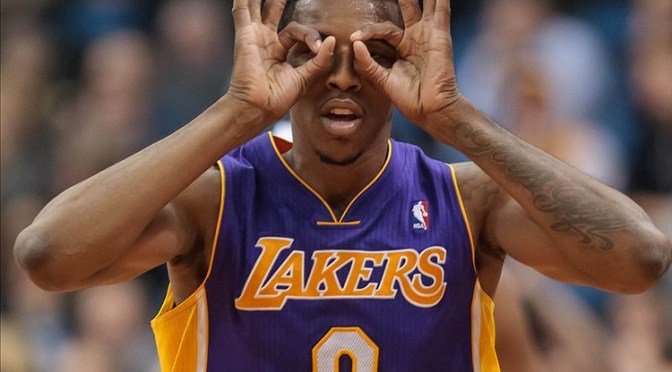
The Three-Pointer Can Ruin Basketball

The installment of the three-point line changed the way basketball is played. While we still see post-proficient players in this day and age, one thing that is undeniable is that along with the evolution of basketball, there has also been the evolution of the types of players in the game. Specifically, one type of player. And you know about the type of player I’m writing about because if you have ever known a kid who loves basketball, you’ll know what kind of situation they’ll play over and over again in their heads:

____________________

The kid’s team is down by two. They need two to tie, three to win. The shot-clock hits 5. The kid gets the ball. 4. The kid dribbles. 3. The kid picks up the ball behind the three-point arc. 2. The ball leaves the kid’s hands. 1. The ball reaches its zenith. 0. The buzzer goes off as the ball rips through the hoop. The crowd goes wild and that kid is hoisted onto the shoulders of his teammates.

____________________

I believe that there is a problem with the romanticism behind the three-point buzzer beater, and in a similar vein, the whole, ‘pull-up three-pointer’ in general. When it goes in, the pull-up three-point shot is one that can bolster egos, and diminish opponent’s confidence, leading them to leave the playground defeated. However, that doesn’t mean it is a good shot. In fact, it is an incredibly low-percentage shot for many, and one, I believe, that too many players take advantage of it in today’s version of basketball. This type of player, the one who takes pull-up threes, is one who is not looking to create the best possible play for his team, but rather to throw up a prayer from 24+ feet. While this is not always the case, I believe that the idea of being the one to get the team ahead by one with no time remaining can be too enticing, meaning that team-oriented basketball takes a backseat.

Basketball used to be played a bit more like soccer; there was no added benefit of a long range shot, meaning that plays to get the ball closer to its desired destination had more value. In this version, teams look for the best shot (the highest percentage shot) they can get within 24 seconds. The three-point line left this idea intact, the idea that teams should always look for the best shot possible, but it started to draw players further away from the basket, towards low percentage land. The Spurs and many other teams have shown that three-point shots can be apart of a game that does look for the best shot possible, especially when playing against a zone defense.

____________________

“What about all of the teams that don’t use the three-point shot as effectively, dad?” 

“Well, son, that’s a good question.”

____________________

Those teams don’t look so good, and their pull-up threes don’t belong in a game that looks for the best shot possible; It is too easy for a player to just pull up and launch a 24-foot prayer instead of looking for the best shot. But as always, this may not continuously be the case, and sometimes, the shot clock doesn’t have enough time left on it for a team to find a good, high-percentage play.

So with the addition of the three-point line, the NBA lost many intricately run plays to ego-boosting pull-up three-pointers. Does that mean something needs to change?

The three-pointer also adds extra excitement to basketball, like it did to the kid on the playground. It allows some teams to come back from larger deficits and could help even out the game. It allowed a new type of player to enter the NBA: the three-point specialist. Usually, these players make up for height and weight advantages other teams have over them by being able to shoot from anywhere past half-court.

The main question I would like to leave here is this: when a team makes a lower percentage shot, should they be rewarded by an extra point? Or should a shot from outside be worth the same as one inside the paint?

Let’s say that we’re watching a game between two teams: one only shoots three pointers, the other only shoots twos. Each team gets 85 shots, which was around the average for last year’s shots by team per game. The median 2 point shot percentage during last years season was about 49%, and the median 3 point shot percentage was 35%. If we apply these numbers to each team, this is what we get:

____________________

Final Score (both scores rounded down)

Team 3-Pointer – 29.75 shots made • 3 points per shot = 89

Team 2-Pointer – 41.65 shots made • 2 points per shot = 83

3-Pointer wins!

____________________

The idea here is that you can run just three point plays, make 14% less than your 2-pointer counterpart, and still win the game by six points. The three-point shot decreases the value of the high percentage shots, and the NBA needs to think about if this is good for the development of the sport or not.
 

Figures In Sports, The Media & The Fans: A Love Triangle

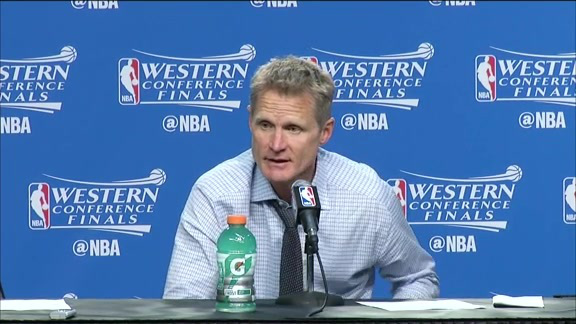
Aside from the Jersey Shore relationship of Ronnie and Sammi, there is probably no other relationship that has more ups and downs than that of the love triangle between the media, important figures in the sports world and the fans that support those figures. This was highlighted by the comments made by Steve Kerr at the end of Game 6 of the NBA Finals, for which he was fined for criticizing the referees. However, when a newsperson asked him about his thoughts of the officiating, was he supposed to praise it? Even if Kerr would be wrong in criticizing the officiating of Game 6, a man is entitled to his opinion. Or is he?

Enter the fans. Fan support when it comes to the practice of sports is absolutely vital to the supported team’s success. Players don’t just say, “we couldn’t have done it without the fans,” for no reason. It is a statistical fact that teams have a better chance of winning games when they play at home, where there are more fans cheering them on. Regardless of this, it is also undeniable that the vast majority of fans are unaware of a plethora of key details that would have them view certain discrepancies in the sports world in a different light. To the average Warriors fan, the $25,000 fine imposed by the league towards Kerr would seem absolutely heinous. Most Warriors fans, though, wouldn’t know that all athletes and coaches in the NBA have a clause in their contract in which it explicitly states that they are not allowed to criticize officiating to a certain extent, which is affirmed by the NBA as a means of protecting their brand. So, while Steve Kerr may not have been able to criticize the referees to the extent that he did, is the imposition of this rule ethical?

All sources point to no. First of all, the media acts as somewhat of a little brother to athletes and coaches in sports, in the sense that they egg their big brother on until they are forced into saying something that they will regret saying later. To contrast, a part of being a professional in the sports world is knowing how to deal with the media and not losing your cool. But at the end of the day, we are all human. It’s a complicated cycle where there is no right answer. Humans, however, have certain basic rights that continue to be denied by contractual obligations today. The freedom of speech, for one, cannot be exercised without a fine, even when the person “at fault” is asked a question that they choose to answer honestly.

The first step to fixing a discrepancy that clearly involves all three parties mention would be to either clarify or nullify the part of the contract that Kerr violated. Whether you think that sports figures should be able to say whatever they want, or that they should at least be able to honestly answer questions presented by the media, something needs to be changed. Because nothing is changing, a constant cycle is emerging where figures in sports say something that they shouldn’t have said because it is pushed out of them by the media, which forces a punishment from the league that they play or coach in. The fans then interject with their surface-level knowledge and add fuel to the fire by ostracizing that league for penalizing their favorite figures in sports – for what they see as no reason. Lather, rinse, repeat.

This cycle produces a bad look for every party involved – the media is always perpetuated as the antagonists (even though they are just doing their jobs), players and coaches are portrayed to have short fuses (even though they are only human) and the league is seen as the evil disciplinarians ((I had to look up how to spell that) even though they just want to clear their name)). And all of the criticism is generated by us, the fans.

As a response to this cycle of negativity, a certain message must be sent to each party involved.

Sports Figures – Stay calm. Stick through it. Sports figures who face adversity are (or at least were at some point) successful.
Media – Keep doing your job. Being a journalist is one of the most difficult jobs in the world because you will almost always be seen as the bad guy. And sometimes you have to be.
Fans – EDUCATE YOURSELVES. Before you share strong feelings about a certain subject in sports, understand why it happened. You may be missing an important detail that could alter your opinion on the subject.
Leagues – The fourth wheel in the love triangle. Stop limiting the free speech of athletes and coaches! Pittsburgh Steelers running back DeAngelo Williams was fined last season for sporting pink accessories in memory of his mother, who passed away due to cancer. THIS IS UNACCEPTABLE! Free speech should always be exercised.

Rules are meant to be broken, but some rules aren’t meant to exist in the first place.