The New York Yankees have won 14 of their last 19 games and are two games behind the Tampa Bay Rays in the AL East. Who do they Yankees have to thank for their recent success? Aaron Judge? Giancarlo Stanton? Luis Severino?
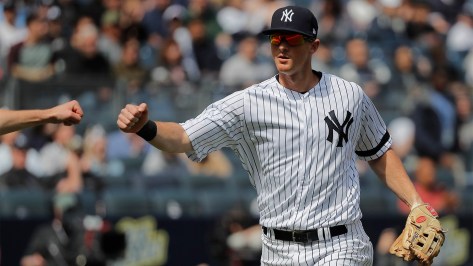
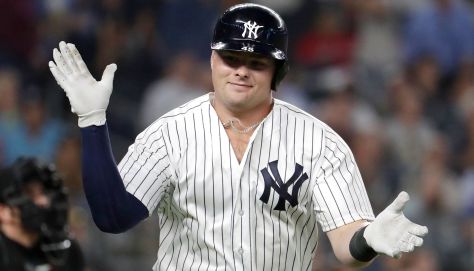
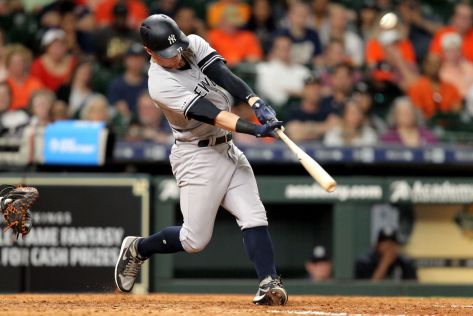
Those are the players who you think of when the Yankees come to mind, but the team can thank players like Gio Urshela, DJ LeMahieu, Luke Voit, Clint Frazier and Brett Gardner for this spur of wins.
Urshela, Voit and LeMahieu all stepped up in the Yankees road trip out West. The Yankees won six of nine games in their series against the Angels, Giants and Diamondbacks.
LeMahieu currently leads the team in batting average at .321 and Voit is leading the team in RBIs with 29.
Veteran pitching has come into play as the Yankees have won every start that CC Sabathia has made this season. In his 18th and last season, Sabathia continues to play a part on this young Yankees team.
Although the Yankees will ride these wins as long as they can, the timetables for return of their stars is up and down.
The Yankees activated Clint Frazier and Miguel Andujar from the injured list on Monday. Neither had a hit in their return, but bringing key components back to this team will continue to be a step in the right direction for the Bronx Bombers.
This is a Yankees team that currently only has four opening day starters in the lineup that are healthy. The Yankees were happy to welcome back catcher Gary Sanchez who missed 11 games before returning.
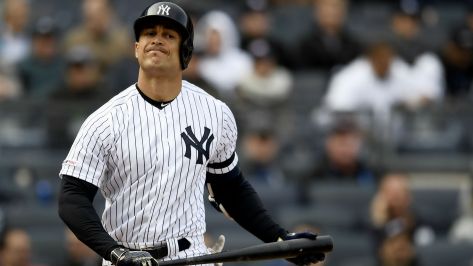
The most notable players who continue to stay on the IL are Giancarlo Stanton, Aaron Judge, Dellin Betances, Luis Severino, Aaron Hicks and Didi Gregorious. These are all major impact players who the Yankees are going to need going forward.
Their timetables of return range from June all the way until August. Stanton was on pace to be back this week, but is now nursing a shoulder injury. The upside for Stanton’s return is that his bicep strain is completely healed.
Judge’s injury is being treated very carefully at this point by the Yankees organization. There is currently no timetable for his return. Yankees manager Aaron Boone confirmed Judge’s injury was significant and little has been determined on when he can play again.
Betances and Severino are both having to deal with injuries to their throwing arms. Betances has been shut down since early April and Severino was scratched from his opening day start. He will make his return in June right now, but Severino will be sidelined until at least July.
Hicks enjoyed a large contract extension of seven years, $70 million this offseason but has not featured in a game this season. Hicks is dealing with back pain and currently is looking to return at some point in May.
Gregorious’s injury is a lot more fragile than a lot of these other injuries. He underwent Tommy John surgery after the Yankees lost in the AL Division series last September. Gregorious had been one of the most consistent players for the Yankees all last season. Depending on how he progresses, the Yankees will have to make a decision on when to bring him back.
The Yankees should enjoy this win streak as long as they can. Many players are having to step up for the team with all of these injuries. They hope to continue their success in a three-game series with the Mariners, which they started with a 7-3 win last night.
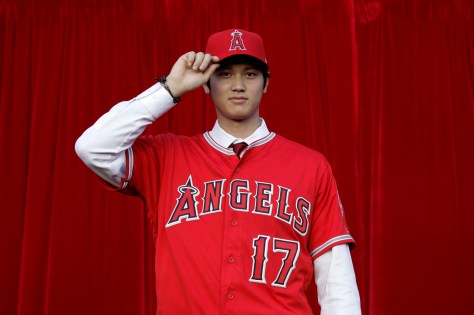
As the hot stove continues during the MLB offseason, it is important to consider an increasingly popular means of signing players: international free agency. This isn’t about the “Japanese Babe Ruth,” Shohei Otani, who will begin his MLB career with Mike Trout and the Los Angeles Angels. I’m instead talking about the dangerous side of international free agency.
Shohei Otani (pictured) continues a successful tradition of baseball players coming to the US to play in the MLB.
The issue stems from a loophole in Major League Baseball and the United States Treasury Department rules surrounding the signing of Cuban baseball players. Since the beginning of the Cold War, direct trade talks between the United States and Cuba have been practically non-existent. On November 8, President Donald Trump announced that he would roll back achievements from the Obama administration in regards trade with Cuba. Despite icy relations between the two countries, Cuban defectors are able to come to the States and immediately set themselves on the pathway to becoming a legal resident. As legal residents, these players can declare for the MLB draft, where they can be chosen by any team setting themselves up to be paid around the league minimum salary, about $500,000. However, if defectors are smuggled into a second country before signing with an MLB club, they can be signed as an international agent and forgo low rookie contracts.
According to Baseball Reference, 76 Cuban defectors have played in the MLB since Fidel Castro’s communist revolution in 1959. MLB teams have identified Cuba as a hotbed for young talent. According to American sports agent Joe Kehoskie, “Cuba is a very close second in terms of overall talent…If you are comparing Cuba and the major leagues, if the major leagues are the American League East, Cuba is the American League West.”
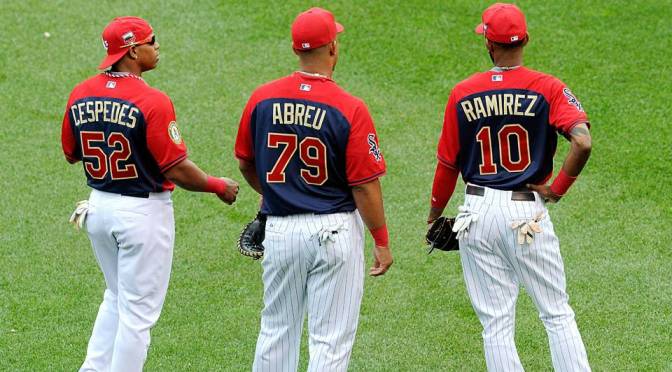
Jose Abreu (pictured) is one of many MLB players who had to defect from their country in order to play in the MLB.
Much of this talent is untapped as a result of the travel restrictions to Cuba. Despite difficulties in scouting players in Cuba, many defectors have been able to make it to the forefront of the MLB – this includes Yankees closer Aroldis Chapman and 2014 Rookie of the Year Jose Abreu. There has been no shortage of success for Cuban defectors in Major League Baseball, but getting them into the country and into the league has proven to be a far more difficult task.
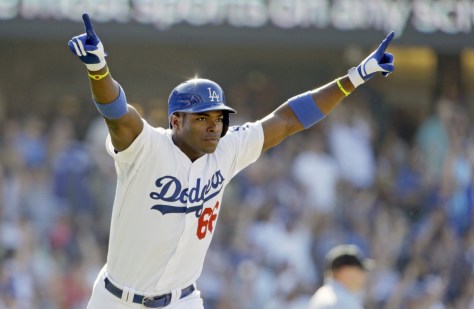
Yasiel Puig took the MLB by storm in 2013. That year, the 22-year-old Cuban defector hit for a batting average of .391 and an OPS of .925 with 19 home runs and 42 RBI in 104 games with the Dodgers. Throughout his career, he has been known for his eccentric behavior and questionable off-field antics. In 2013, he was arrested on a reckless driving charge for going 110 mph in a 70 mph zone. On a separate occasion, when asked why he licks his bat during the 2017 World Series, Puig replied, “I make love to the bat and he pays me back with hits.”
Yasiel Puig (pictured) has had one of the more well-documented journeys to the MLB of any Cuban defector.
Puig’s journey to American baseball was similar to many other Cuban defectors. He was approached by a Miami air conditioner repairman, Raul Pacheco, who told Puig that he would be able to smuggle him into Mexico where he could take up residence before being signed as an international free agent. In return, Pacheco would get 20% of Puig’s MLB earnings. Puig was smuggled into Mexico by a drug cartel and held captive during negotiations between Pacheco and the cartel. Once negotiations were settled and Puig was able to escape, he was scouted by MLB clubs and signed to a seven year, $42 million deal with the LA Dodgers. Puig’s saga, however, was not over. On December 16, 2014, a Miami man named Gilberto Suarez was convicted of smuggling the Dodgers’ star outfielder to Mexico and was forced to forfeit the $2.5 million that Puig owed him after signing his contract. According to the Miami Herald, Raul Pacheco organized Puig and others’ escape from Cuba to Mexico, while Suarez smuggled the group into the United States. Suarez spent a month in federal prison for his crimes.
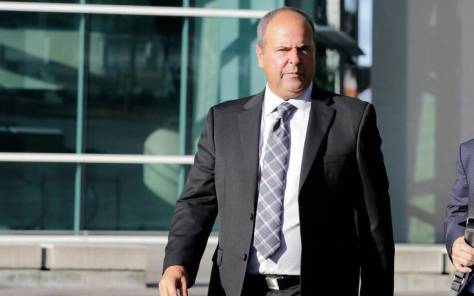
Gilberto Suarez was not the only smuggler to be arrested for trafficking Cuban baseball players. Sports agent Bartolo Hernandez was sentenced to nearly four years in prison and a forfeiture of $15.5 million on smuggling charges. Many Cuban MLB players, including Jose Abreu, testified to being smuggled into Mexico or Haiti using forged documents. In order for Cuban players to be signed as free agents, the Treasury Department needed to amend its stance on normalizing relations with Cuba. On March 21, 2016, United States President Barack Obama made significant strides towards implementing these policies by becoming the first president to visit Cuba since Calvin Coolidge in 1928. The trip was a highlight of Obama’s efforts to lift the Cuban embargo imposed by President Dwight Eisenhower in 1958. Featured on the trip was an exhibition baseball game played between the Tampa Bay Rays and the Cuban national team. The game was symbolic of progress made by the Obama administration. Just before his trip on March 15, 2016, the President announced that his administration would allow Cuban citizens to work in the United States. As a result, Cuban players would be able to be signed as international free agents right out of Cuba.
Sports agent Bartolo Hernandez (pictured) faces four years in prison along with a forfeiture of significant funds due to his player-smuggling activity.
The change in policy never got a chance to influence Major League Baseball. On November 8, 2017, President Donald Trump’s administration announced its decision to overturn the decision made by the Obama administration to loosen restrictions on visitation and trade with Cuba. As a result, Cuban players are, once again, unable to be signed as free agents without having to take up residence in a third country. In light of this issue, there are a number of different policies that both Major League Baseball and the United States Federal Government should enact to lessen the threat to Cuban defectors playing in the MLB. Unfortunately, the MLB owners and the Players Union have already agreed to a new Collective Bargaining Agreement through 2021. Hopefully, at that time, changes would be able to be made in regards to the integration of Cuban defectors into the MLB. One potential solution to the issue is to end the financial incentives that persuade defectors to take residence in a third country. The MLB would be able to force all international players to enter into the draft, meaning that whether a defector is signed from Mexico or from the United States, he would make the same salary. However, the MLB Players Association is one of the strongest unions in sports, and this legislation may seem like an effort to decrease player salaries, and likely would not be agreed upon. Another potential option would be to allow Cuban players to sign as international free agents from Cuba. According to the New York Times, the MLB is currently on board with this plan, but needs permission from the Treasury Department in order to engage in trade with Cuban players. Such consent from the Treasury Department seems increasingly unlikely given the Trump administration’s current policies towards trade with Cuba. There is still potential for a resolution to come from outside of the MLB, if the current administration changes its attitudes towards Cuban relations.
Unless MLB fans want to see the next Yasiel Puig or Jose Abreu subjected to drug cartels and kidnapping, they must call their representative in Congress and make several other initiatives to vocalize their support of normalized relations with Cuba.



 Banter Sports