All posts by Ben Zeltser

10 Trends to Keep an Eye on in the Second Half of the 2019 Premier League Season

1. Fullham’s Relegation Battle

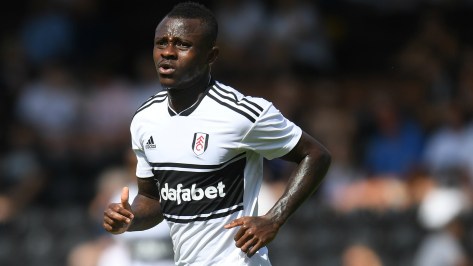
Claudio Ranieri returned to the Premier League to take over as Fullham’s manager on November 14, 2018. Despite picking up a quick victory in his first match, Ranieri has amassed a total record of 2-3-7. While Fullham was just promoted, the footballing world expected the Lily Whites to compete right away, especially after spending £100 million this summer. Now, sitting in the 19th spot and seven points away from surviving relegation, it is time to panic for Fullham FC. It is difficult to imagine that any potential new January signings would provide a form-changing boost, though the Ryan Babel signing from Beşiktaş looks promising. Aleksandar Mitrović proved early into the season that he is a legitimate Premier League striker. Ryan Sessegnon must live up to his wonder-kid status, Jean Michaël Seri must live up to a price tag that had top six clubs looking for his signature this summer, and André Schürrle must show his Dortmund pedigree. Any hope of escaping relegation will depend on Ranieri’s ability to galvanize his group of talented players for the second half of the season.
jean-michael-seri-fulham-v-celta-vigo-pre-season-friendly_1atpeb526o3at1j5m0uqfvyr9h.jpg

2. Wolves’ Top 6 Challenge

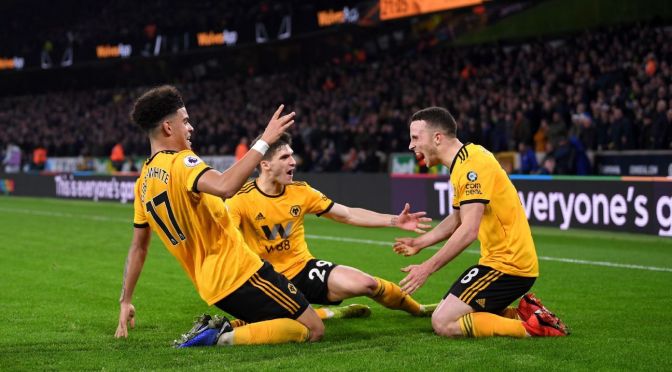
Wolverhampton Wanderers have proven to be the most interesting team in the Premier League this season. In nine matches this season against the top six, they hold a 3-3-3 record, showing that they can compete with any other team in the league. They currently sit in 8th place, but could find their way out of a 12-point deficit from the top 6 with only four difficult fixtures left on their EPL schedule. Additionally, after defeating Liverpool in the FA Cup, they face an easy 4th round draw to move on in the competition. Manager Nuno Espírito Santo has effectively gotten all of his players on the same page after overhauling their roster coming into the Premier League, which is unsurprising given his Portuguese background combined with the eight Portuguese players that they have listed on their 24-man roster. This includes key contributors like Diogo Jota, Rúben Neves, Rui Patricio, João Moutinho and Hélder Costa. This unique combination of team chemistry and natural talent could make for a surprising run for the Wolves in 2019.

3. Homegrown Player Rule as a Factor for Less January Transfer Activity

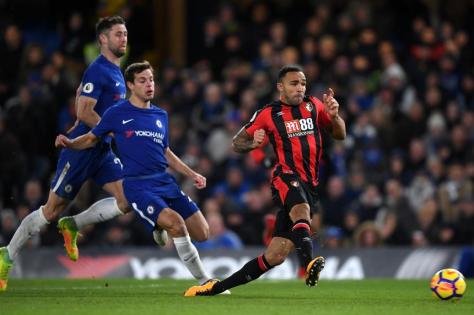
In an effort to make the EPL more competitive for clubs that don’t have as many funds as the high rollers and in hopes of bringing up more homegrown talent, the Premier League mandates that a maximum of 17 non-“homegrown” players could be on a 25-man roster at a time. For a player to be considered homegrown, they must have spent a significant amount of time at an English or Welsh academy, and/or be English or Welsh. For example, players like Paul Pogba and Hector Bellerin spent two years in an English club’s academy, meaning they can be considered homegrown. This has proven harmful in transfer activity, as teams are able to take advantage of other clubs’ ability to pay large amounts and necessity for English talent. This past summer, Aston Villa tried making Tottenham overpay for Jack Grealish, which they were unwilling to do. This January, history is repeating itself as we see players like Callum Wilson of Bournmouth being labeled with a £40 price tag. Given the stingy nature that we have recently seen from teams like Spurs, Manchester United and Arsenal, we may be in for an uneventful transfer window.
912747880.jpg
Chelsea target Callum Wilson (right) has a far greater price tag than his play would dictate.

4. Manchester United’s Manager Sweepstakes

Caretaker manager Ole Gunnar Solskjær’s success since taking over has made it difficult to look elsewhere for a long-term manager solution. Names like Mauricio Pochettino, Zinedine Zidane, Massimiliano Allegri and Gareth Southgate have caught the attention of United’s front office, but how could they demote a manager with a perfect record after half a season of turmoil? Higher ups are likely looking for any reason to demote Solskjær, so we can only expect him to keep the reins if other candidates refuse or if he continues his unfounded streak. Given the club’s current success, the best course of action would be to wait and see how things play out.

5. Is Sarri the Answer for Chelsea?

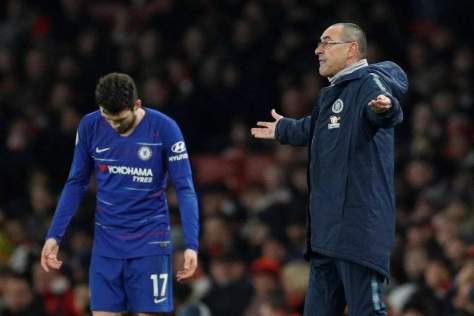
Chelsea manager Maurizio Sarri may have deflected his recent woes with the sale of Álvaro Morata and purchase of Gonzalo Higuaín, but it remains to be seen if Higuain has enough left in the tank to regularly contribute for a top-flight Premier League club. Sarri’s possessive footballing strategy has its drawbacks, and his lack of a consistent striker leaves him to rely offensively on Eden Hazard too frequently. While his fullbacks have quality, they lack the requisite pace to play on the wings simultaneously, which opens the pitch up for opposing wingers. A wide attacking team like Liverpool would surely expose Chealsea’s faults, which is why Antonio Conte played César Azpilicueta at the center-back position in his tenure as manager. Chelsea is trending downward, but Higuain’s arrival could hopefully change that. Please stop loaning Michy Batshuayi.
maurizio-sarri-190119.jpg

6. Manchester City’s Cup Involvement

It comes as no surprise that, aside from Liverpool, their biggest competition is themselves. Manchester City is still contending in the Carabao Cup, the FA Cup, the Champions League and the Premier League. While the prospect of winning four cups in one season seems exciting, its completion would surely take a toll on the fatigue of the club’s players. A deep run in the Champions League appears likely, but could impact the fitness of the team’s top players for the Premier League. City must keep winning domestic games to keep up with Liverpool, and this could prove difficult if Pep Guardiola doesn’t get his tactics right.

7. Liverpool’s Wonder Season could Still End as a Flop

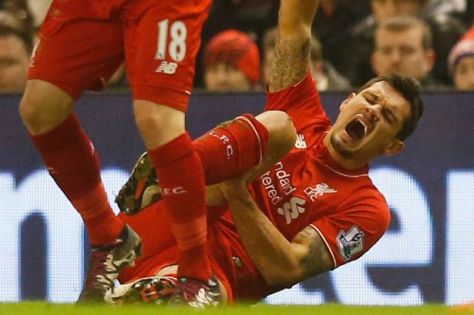
Call me a pessimist, but I can’t help but think about the possibility of Liverpool finishing without any silverware this season. Liverpool have crashed out of both the FA Cup and Carabao Cup, leaving a Champions League matchup against a formidable (but Müller-less) Bayern Munich squad and a league lead of four points. A Champions League fallout would likely mean a strong domestic finish, so it is hard to believe that Liverpool will not walk away with ANYTHING at the end of May. Still, it could happen. The team has shown flashes of lacking defensive options, having had to sub in a teenager against Wolves after a Lovren injury, and having had to play Fabinho is the center back role in the following games. Still, a world-class front three, a top-three center back and goalkeeper and an electrifying manager should keep them in contention both domestically and in the Champions League.
Liverpool-vs-West-Brom.jpg

8. Tottenham’s Stadium Move

Dele Alli and Harry Kane are both out of commission until March, and Hueng Min Son is away on international duty. Lucas Moura is also dealing with an injury, leaving Spurs with very few attacking options at the moment. Fernando Llorente has scored more domestic goals for other teams this season than for Spurs, so they would do well to pick up an offensive threat before the January transfer deadline ends. However, it is difficult to expect Daniel Levy to reach into his pockets given the stingy attitude that he showed over the summer. The only hope for Tottenham’s next few months of fixtures is for their form to take a positive turn. This could take effect through a move to their new White Hart Lane, which has continuously pushed forward its grand opening date. Spurs have grown accustomed to calling Wembley their home over the past few seasons, but a move to their new stadium could provide the spark that Spurs need to continue challenging in all four levels of competition.

9. Özil’s Arsenal Involvement

Unai Emery’s squad is starting to show some life this season, but watching their play through 90 minutes makes it obvious that this team is missing the requisite creativity and flair in the middle of the pitch to take their team to the next level. The problem with fielding Mesut Özil as the playmaker of the team is that it often seems as though the team rides or dies with his performance. If Özil picks out the right pass for a goal off of the counterattack, the team will be successful. However, if he overthinks a simple ball, it could produce a costly turnover. This kind of make-or-break quality is shared by players like Paul Pogba who are involved on so many parts of the pitch that their level of play is integral. The truth is that Arsenal do not have the quality to finish in a Champions League spot without Özil’s influence in the middle, but if Unai Emery is unwilling to take that risk, he may very well find his team regressing in the final stretch of the season.
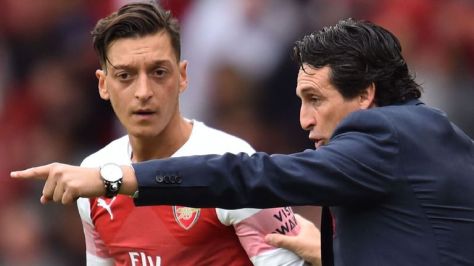
skysports-unai-emery-mesut-ozil_4389637

10. The VAR Discussion Escalates

Everybody knows that VAR will eventually be instituted in all high-level footballing competitions – the question is simple when. Managers like Antonio Conte, Mauricio Pochettino and Jose Mourinho have spoken out about different problems that they have with VAR, scaling from the extra time that should be given due to its implementation, to the effect that it would have on the emotion of the game. Other managers have expressed a disinterest or ambivalence in the subject, expressing their understanding for the technological development of sport. Some managers have even expressed their enthusiasm for its institution. While providing video review for key moments in matches would certainly increase the percentage of correct calls, it does indeed disrupt the flow of the game and present its own issues that some fans would have initial issues with. In light of recent calls in the Premier League, it will be interesting to see how soon its implementation will come.
The All NBA Overpaid Team

The NBA operates on a soft salary cap, which has translated into several ludicrous contracts in recent history. This not only attributes to inflation, the latest collecting bargaining agreement and ownership’s necessity to put out a successful product, but it also speaks to the shifting power dynamics within the league. Players in basketball have more bargaining power than ever, which has understandably resulted in some players earning far beyond their worth. This not only shifts the power imbalance within the league, but it also compromises the amount of flexibility that a team may have. A team deep into the luxury tax without legitimate winning aspirations (Wizards, Cavs, etc.) faces few options in reversing its fortune, rendering it stagnant and forcing a rebuild. Players will then be traded for less than their market value, further deepening the cycle of loss, as the team hopes to strike gold in the draft lottery. These kinds of concerns reflect the importance of paying players adequately, and cutting costs where possible.

Players who are on the last years of their deal or with a team option have been left off the list. Additionally, while some NBA stars are being tremendously overpaid, their value and usage as players will usually make for a better deal than that of a player who gets paid a bit less but never plays. Without further ado, here are the 15 most overpaid players in the league, with some honorable mentions at the end.

First Team

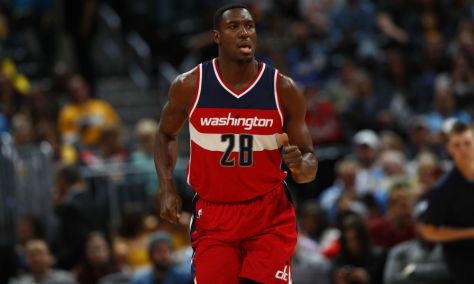
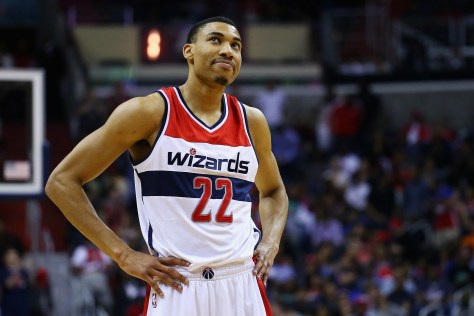
Otto Porter Jr. (WSH): $27m owed for next 2 years + 1 year PO for same amount – When it comes to Otto Porter, the Wizards trapped themselves in a deal that could very well be the reason for their lackluster season. As a restricted free agent in 2017, the Brooklyn Nets offered Porter 4 years, $106 million – and the Wizards matched the offer sheet. Given that this happened later into free agency, the Wizards had few options to replace his production, especially as a promising young player who is prototypically catered for today’s game. Don’t get me wrong; Otto Porter is a good player who can catch and shoot, play efficient basketball and get back on defense. Unfortunately, Porter seems to be showing some signs of regression after improving in each of his previous seasons, and he is simply not worth three more years of $27 milion.

OttoporterDMVSN.jpg

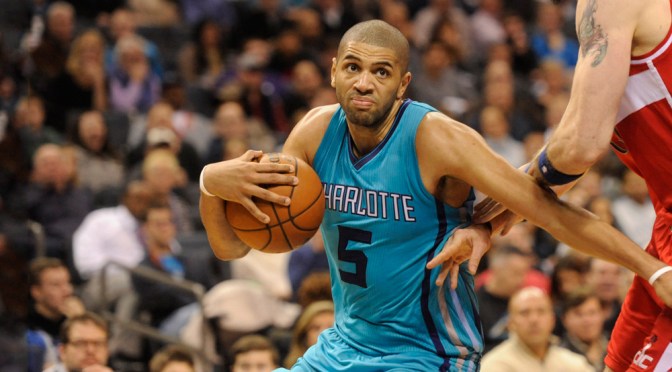
Nicolas Batum (CHA): $25.5m owed for next 2 years + 1 year PO for same amount – While the Hornets are currently surging behind big performances from Kemba Walker, Nicolas Batum slows down their development as a relevant team in the East. In 2016, Batum signed a 5 year, $120 million extension with the Hornets after posting solid career numbers in his first year with MJ’s team. Charlotte backloaded this deal so that they had to pay less of it in the first few years, which will come back to hurt them in these important upcoming seasons. As Kemba continues to prove his ability, the Hornets will be sure to make some moves as to make room for his max contract, while also improving their roster, meaning that Batum could be on the move.

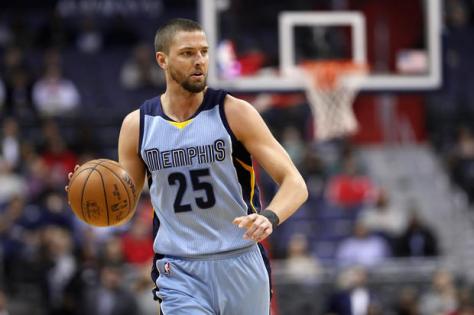
Chandler Parsons (MEM): $24.5m owed for next 2 years – This is likely the worst contract in the NBA. Since signing a max deal worth 4 years, $94.8 million in 2016 with Memphis after posting encouraging stats in Dallas, Parsons has shown that he has nothing left in the tank. He hasn’t been able to return to his previous form since coping with injury, which has resulted in only 73 games in the past three seasons, having been unable to eclipse 20 MPG or 8 PPG. Memphis is stuck paying a backloaded sum for the next two years, for a player with no trade value.

Memphis Grizzlies v Washington Wizards

Ryan Anderson (PHX): $18m owed for next 2 years – Houston was finally able to offload Ryan Anderson this past offseason after agreeing to pay him $80 million over 4 years in 2016. This deal is not as bad as it initially seems, because the Rockets front-loaded his salary, and Phoenix only owes him $15.6 million next season. The Suns can also afford to absorb the $20.4 million payout that he is owed this season, given their wealth of young talent. Anderson has only played 20 MPG this season and is averaging less than 5 PPG on horrible shooting.

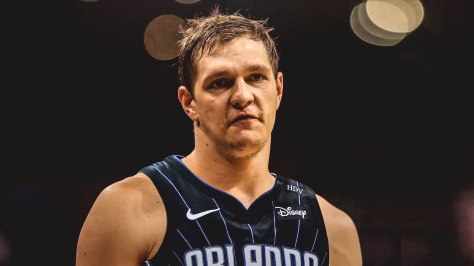
Timofey Mozgov (ORL): $16.4m owed for next 2 years – Mozgov is a product of one of the most head-scratching deals in recent history. In the 2016 offseason, the Lakers signed Mozgov to a four year, $64 million deal. This money came completely unprecedented, given that Mozgov was averaging 6 PPG and 4 RPG in 18 MPG the year before. Unsurprisingly, this deal was quickly labeled a mistake, and the Lake show immediately traded him to Brooklyn a year later. Today, Mozgov gets paid more than Clint Capela, yet hasn’t played a single minute in Orlando. I’d be surprised to find this man playing more than 10 MPG in the NBA ever again.

Timofey-Mozgov-surprised-by-trade-from-Hornets

Second Team

Tristan Thompson (CLE): $18m owed for next 2 years – Whether it was a result of scrambling or a result of courting LeBron, the Cavs offered a bevy of players ludicrous contracts in the past decade. One of these players is big man Tristan Thompson, who signed a 5-year, $82 million deal in 2015. Since the deal, the big man showed little signs of improvement, showing a lack of versatility. This most recently culminated in his being dropped down in the Cavs’ rotation this past postseason, seeing his MPG decrease to 22. Thompson still produces, averaging a double-double for the league’s worst team in the league, but this is likely due to the fact that Kevin Love has been injured. Expect Thompson to be a role player for the rest of his career.

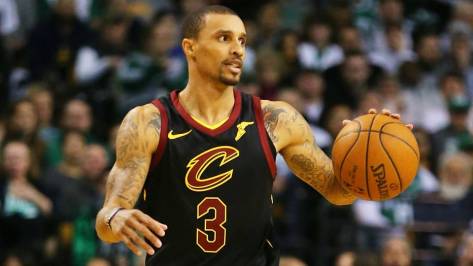
George Hill (CLE): $18.5m owed for next 2 years – The Sacramento Kings signed Hill to a 3-year, $57 million deal in 2017, with plans for him to mentor then-rookie D’Aaron Fox. With multiple promising young guards on this roster, Sacramento eventually offloaded this deal to the desperate Cavs amidst their mid-season rebuild to keep the Cavs in contention for a playoff run and keep LeBron. Cleveland eventually made the Finals, but Hill proved to be underwhelming. Neither the Kings nor the Cavs were able to replicate the production he had for the Jazz in the season prior to his deal, putting Cleveland in the unfortunate position of owing star-level money to an average point guard.

hill-george-04212018-usnews-getty-ftr_1xddhnmvuog8w1oznyk62jxa6b.jpg

Evan Turner (POR): $18m owed for next 2 years – Turner was always a solid defensive two-guard who thrived in a bench role with the Celtics in 2016. That, coupled with a 17.4 PPG season in 2014 with Philadelphia gave Portland enough confidence to offer him $70 million over four years. Turner has played an integral bench role for Portland over the years, but his overall performance and lackluster shooting certainly does not merit the price tag.

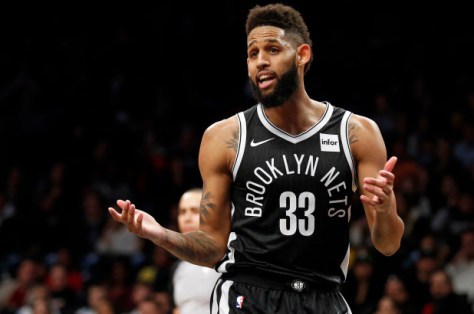
Allen Crabbe (BKN): $18.5m owed for next year + 1 year PO for same amount – As a restricted free agent in 2016, Crabbe leveraged Brooklyn’s 4-year, $75 million offer to get his Portland Trail Blazers to match a lofty offer sheet. Just as the Nets did to the Wizards, Portland was left to overpay another bench player. Crabbe eventually found his way onto the Nets anyway, but has started less than half of his games this season and is shooting a .306 FG% on 8 PPG. After completing this deal, Crabbe will likely be a bench guy for the rest of his career.

allen_crabbe

Hassan Whiteside (MIA): $25.4m owed for next year + 1 year PO for same amount – There was a time when it seemed like Whiteside was worth every penny of this four-year max deal. He re-signed after a 14 PPG, 12 RPG, 4 BPG season on extremely productive shooting, but has shown little character after collecting his paycheck. A promising first season of the deal was followed by a 2017-2018 season full of disappointment, even being benched in fourth quarters. It seemed as though Whiteside had taken a step back in his career, and while this season looks like an improvement from last year, much remains to be sought after. Whiteside finds himself on this list because despite still putting up a respectable 13 PPG, 14 RPG and 3 BPG this season, his shooting is less productive than ever, he has been committing more fouls than ever, and his character in the locker room is simply not worth the talent.

Third Team

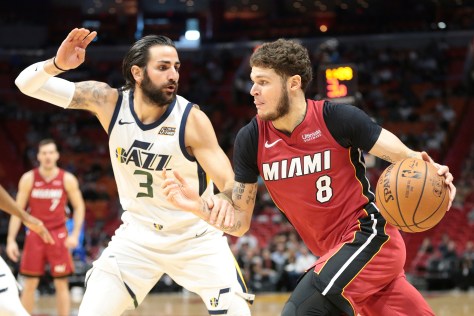
Tyler Johnson (MIA): $19.2m owed for next year + 1 year PO for same amount – The Heat overpay plenty of players, and none of them are more unknown than Tyler Johnson. This man is a mystery to any NBA fan who lives outside of Miami. In reality, Johnson is a solid two-guard who brings plenty of energy and speed. These qualities are hardly worth the lofty price tag, and despite being young and having plenty of time to turn his career around, there is little expectation that he lives up to the money. Johnson hasn’t started this season after only starting half of the Heat’s games last year, and has seen his minutes and production consistently decrease since signing a four-year, $50 million offer sheet with the Nets, which was matched by the Heat. This deal was heavily backloaded, and Johnson is owed almost 80% of the money over the next two years.

tyler-johnson.jpg

Gorgui Dieng (MIN): $16m owed for next 3 years – Dieng signed a four-year, $64 million contract for the Timberwolves in 2016 to keep him through 2021. Minnesota essentially gambled on Dieng’s development as a player, and lost. A defensive specialist who sets good picks and has some range, the Senegalese international has declined in his last two years because of his offensive limitations. Dieng gets paid big money to play backup to KAT, and will likely continue to play a bench role for the rest of his career.

Ian Mahinmi (WSH): $15.9m owed for next 2 years – This veteran has averaged more than 20 MPG in only one season in his NBA career. Washington decided to give him the same contract as Dieng after averaging 9 PPG, 7 RPG and playing hard defense for the Indiana Pacers post-Roy Hibbert. The big man wouldn’t see the floor on any other team in the NBA, but has been forced into action this year because of Washington’s lack of big men. Still, he hasn’t had less minutes since 2011, and gives the Wizards zero wiggle room when it comes to cap space.

Ian_Mahinmi_Wizards_2017_AP.jpg

JR Smith (CLE): $15m owed for next 2 years – Everyone’s least favorite player re-signed with Cleveland in 2016 following their NBA title and a lengthy contract dispute. The deal came to four-years, $57 million, keeping an aging locker room distraction who is on the decline for much more than he is worth. The detrimental effects of these contracts have only become evident upon LeBron’s departure, when his presence would guarantee a constant inclusion in the finals, and therefore a justification for the payouts.

Bismack Biyombo (CHA): $17m owed for next year + 1 year PO for same amount – Biyombo’s payday came as a product of his performance in the 2016 playoffs with the Toronto Raptors. His rim-protection was highly coveted by the Magic, enough for them to offer him a whopping four-year, $72 million deal. As a combination of seeing his minutes decline in Orlando, the drafting of Jonathan Isaac in 2017 and Mo Bamba in 2018 and the play of Nikola Vucevic, Biyombo was dealt to Charlotte in a deal that swapped him with Mozgov. This deal was likely done as a favor to Biyombo, who could potentially revitalize his career with the Hornets. Unfortunately, the Congolese international has been unable to pass Cody Zeller and Willy Hernangomez on the depth chart.

Bismack-Biyombo.jpg

Honorable Mention

Brandon Knight (HOU): $15m owed for next 2 years – Hasn’t played all year, part of Houston’s dump of Ryan Anderson, could potentially see minutes when healthy.
Solomon Hill (NO): $12.7m owed for next 2 years – Has barely played in last two seasons with low production, but contract isn’t big enough to make the list.
Marvin Williams (CHA): $14.5m owed for next year + 1 year PO for same amount – Long time NBA journeyman, hasn’t been bad (career 10.5 PPG)
Miles Plumlee (ATL): $12.5m owed for next 2 years – Averages 12 MPG for one of the worst teams in the leauge, solid defender and relatively efficient on offense, but one dimensional and a dime a dozen. Hawks don’t really need the cap space though.

usa_today_10763957.0

Meyers Leonard (POR): $11m owed owed for next 2 years – Great size but stopped developing after getting paid. Hasn’t played 20 MPG in three years.
Matthew Dellevadova (MIL): $9.6m owed for next 2 years – Contract is a product of his hard play in the playoffs on the Cavs, lacks high athletic ceiling, hasn’t played much.
Cristiano Felicio (CHI): $8.1m owed for next 3 years – Only 15 MPG on a bad NBA team, doesn’t look like he will get much time over next three years when he is on contract.
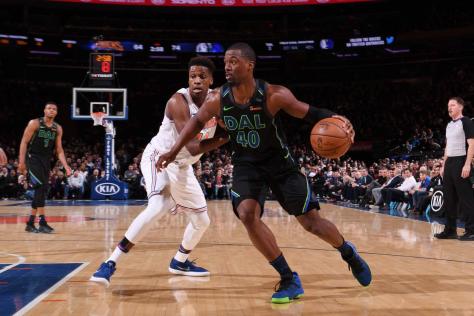
Harrison Barnes (DAL): $24.5m owed for next year + 1 year PO for same amount – Gets paid like a star but could never be better than the fourth player on a championship team. Still, didn’t make top 15 because he has averaged 18 PPG since joining the Mavs.

4e8c8a_f7e729e2ef5e4ef58a4bd7766dd8fe21_mv2