All posts by billywilson22

NBA Injuries: “What Could Have Been” Through the Lens of Derrick Rose

Injuries are apart of sports at all levels, but they are thrust into the national spotlight at the professional level.  Countless players who were once deemed as promising prospects and perennial All-Stars have had their careers severely altered after a major injury. It is always disappointing to see such talent be caged by something as frustrating as an injury, but it unfortunately is a part of the game that both players and coaches must plan and prepare for an injury that keeps them out of action for months.

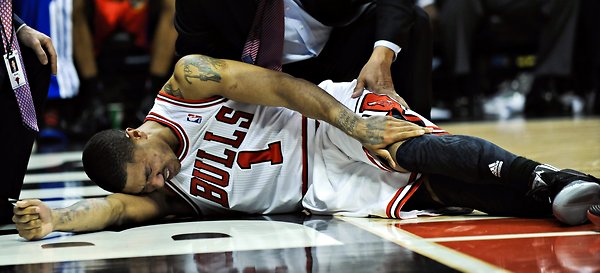
Perhaps no one in the NBA in the past few years embodies a “what could have been” talent than current New York Knicks and former Chicago Bulls point guard Derrick Rose.  Drafted first overall out of Memphis to his hometown Bulls, Rose was named Rookie of the Year and was also named to three All-Star teams in his first four NBA seasons.  Rose was undoubtedly the face of the NBA after his 2010-2011 MVP award and was considered apart of the youth movement that was slowly making its way around the NBA, specifically at the point guard position.  He was subsequently awarded a lifetime shoe deal with Adidas and a max contract extension. However, after Rose tore his ACL in the 2012 playoffs, his career took a turn for the worst.

76ers-bulls-basketball.jpg
Rose (pictured) suffered his first major injury in the 2012 playoffs, where he tore his ACL.

To date since his injury, Rose has never played a full season in the NBA. His breathtaking agility and athleticism that he relied upon to elevate him to elite status were never the same after his countless knee injuries and after that ACL tear, missing a combined 152 games throughout the rest of his tenure in Chicago.  Rose undoubtedly would have and most likely still would be a perennial MVP candidate and a top-five point guard in the league would he have avoided his major injuries.

Rose is not the only NBA player to have had their promising careers cut short and altered by major injuries.  Grant Hill was tabbed to be one of the best players of all time, but his nagging ankle injury forced him to only suit up for 47 games for the Orlando Magic in his first four seasons with the team upon signing with them in free agency from a successful and promising tenure with the Detroit Pistons.  He went from a constant triple-double threat to a role player with no lag-time in the middle of his NBA career.  While he still carved out a respectable career, one can only imagine what his career would have been had those ankle injuries not arisen.

Hill2000.jpg
Grant Hill’s (right) lingering ankle pains set him back his entire career.

Tracy McGrady was regarded as one of the best “one-on-one” players in the league during his prime, with his signature moment coming against the San Antonio Spurs while he was with the Houston Rockets when he scored 13 points in the final 35 seconds of the game to complete an epic comeback victory. He had nagging back, shoulder and knee issues that left him with rarely any significant playing time towards the latter part of his career. These injuries kept a great player from being an all-time great, impeding McGrady from ever being able to win an NBA championship.

Brandon Roy, one of my favorite players to watch during his time with the Portland Trailblazers, was forced to retire in his mid 20s due to knee injuries.  Kobe Bryant has said on multiple occasions that he was the toughest assignment to guard on defense throughout his whole career. He, along with Trailblazers teammate Greg Oden make up a couple of the biggest question marks in the history of the NBA.  Roy looked to be a consistent All-Star and Oden was chosen first overall in the 2007 NBA draft, so it must have been heartbreaking for Trailblazers fans to see their players of the future to go down for their entire careers with injury trouble.
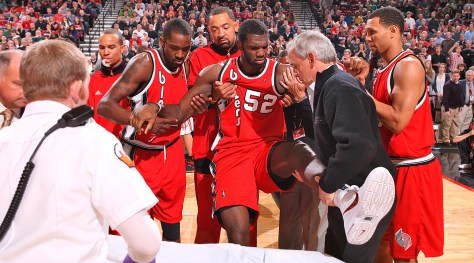
bill-walton-greg-oden-brandon-roy-portland-trail-blazers-1
Greg Oden (middle right) never got to live out the career of a first overall pick largely due to his inability to stay healthy.

There are too many examples of injuries ruining or altering careers.  One can only feel for the players who are affected by them, but as mentioned before, they are an unavoidable aspect of competing at the highest level.
 

Tanking in Sports & Why Teams Continue to Do So

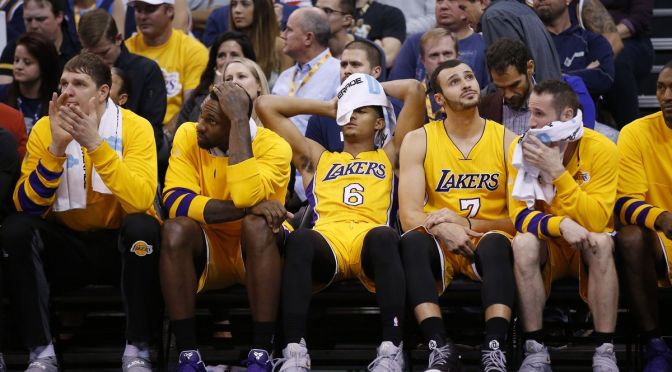
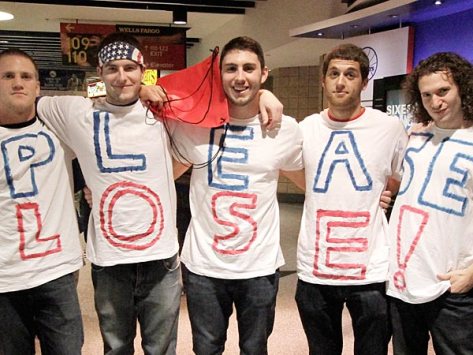
Tanking has always been a controversial practice in sports, and it has become commonplace in many major sports, especially in the NBA. When a team elects to “tank” a season, that team essentially waves a white flag to the ongoing season and trades away its best talent (such as the Lakers shipping Sixth Man of the Year candidate, Lou Williams, to Houston) in order to allow its younger talent to develop with extended playing time or accepts losing games so that the team can receive a high draft pick that it could build around.  Almost no NBA team would admit to intentionally trying to lose games, but the reality of the situation illustrates how common this practice is.

My hometown Lakers seem to currently be tanking their season in order to secure a top three pick in the draft, which would otherwise belong to the Philadelphia 76ers (due to the Dwight Howard trade) should it fall outside of the top three selections.  Thus, the Lakers organization elected to bench former starters Timofey Mozgov and Luol Deng, who are guaranteed a combined almost $140 million over the course of their contracts.  While the Lakers’ front office explains this move as simply wanting to evaluate younger talent, there is no one working in the organization who would not value the addition of a top three pick to their already exciting young core that is still raw, but bursting with All-Star potential.

imported.jpg

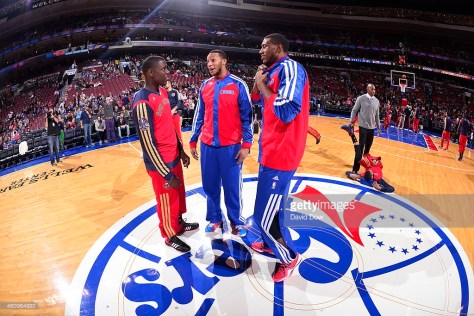
The most blatant example of tanking lies within the Philadelphia 76ers organization, spearheaded by its former GM, Sam Hinkie.  Tasked with attempting to return to the 76ers to playoff contention, Hinkie devised an audacious plan to intentionally become the worst team in the league for two to three years in order to secure the right to select young talent in upcoming drafts. Hinkie believed that this was the right move to be made due to his background in analytics and the fact that all numbers pointed to unsuccessful output from the current players on the roster.  Thus, if they wanted to bring a championship back home to Philadelphia, the best way to do so was to accept short-term failure, and PLENTY of it. Hinkie traded All-Star point guard Jrue Holiday to the Pelicans and complementary players Thaddeus Young and Evan Turner to the Timberwolves and Pacers, respectively, to secure draft choices, thereby beginning the process of tanking in the short-term for long-term success.

460964933.jpg
Jrue Holiday (left), Evan Turner (middle), and Thaddeus Young (right) making small-talk in the midst of Sam Hinkie’s Sixers rebuild in 2013.

Executives, players and coaches took notice of what the 76ers were doing around the league and the majority of them were not in favor of purposely losing games, as they believed that it ruined the competitive nature of the NBA.  While I understand that tanking can be considered an attractive avenue for a front office to consider pursuing, I am of the opinion that an organization should always attempt to instill a winning culture.  Organizations should always look to win as many games as possible. If young players are constantly surrounded by losing, along with a line of thinking that it is permissible to lose games, it sets the team up for both short and long-term failure.  There is no point in losing to acquire and develop players through the draft if they do not learn how to play the game the right way and set themselves up for winning.  In addition, free agents tend to stay away from teams that repeatedly tank, as tanking teams always ship out veterans for cap relief and draft assets.  This is not to say that teams can’t elect to rebuild, as even the San Antonio Spurs will have to go through that process at some point, but there is a difference between rebuilding and tanking (to say the least).  Rebuilding teams look to the next season and make roster moves accordingly, but tanking teams are eager to see their teams fail, such as the 76ers, or presently, the Lakers.  Under Hinkie, the organization was sporting a roster that was filled with fringe rotation players and individuals who were most likely meant to be in the D-League or to be playing overseas.  However, with a roster filled with young players like Ben Simmons, Joel Embiid and Jahlil Okafor, the 76ers are one point guard away from being a contender in the Eastern Conference next season. This success would not have been possible without Hinkie’s “Trust the Process” movement, but this is not to say that tanking is an aspect of sports that I support.

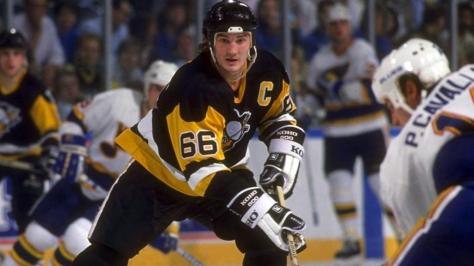
Tanking will likely continue to be a part of sports, despite commissioner Adam Silver’s recent act of speaking out against tanking in the NBA. However,the NBA is not the only professional sports league where it occurs. Tanking in the NFL was exemplified by the “Suck for Luck” movement, where teams were content with losing for the chance to select then Stanford QB Andrew Luck as the face of their franchise. In the 1983 and 1984 NHL seasons, multiple teams were vying to draft Hall-of-Famer Mario Lemieux. These decisions have constantly been made in sports with the organization’s best interest in mind, but with oversight towards the fact that fans buy tickets to see their teams compete for a win in every game. It will be interesting to see if NBA commissioner Adam Silver, along with executives of other major sports, will look for ways to limit and discourage the act of tanking in the near future.

cut.jpg
Several teams tried tanking their way to the first overall selection of the 1984 NHL draft, when Hall-of-Famer Mario Lemieux was chosen by the Pittsburgh Penguins.